Marketing Articles
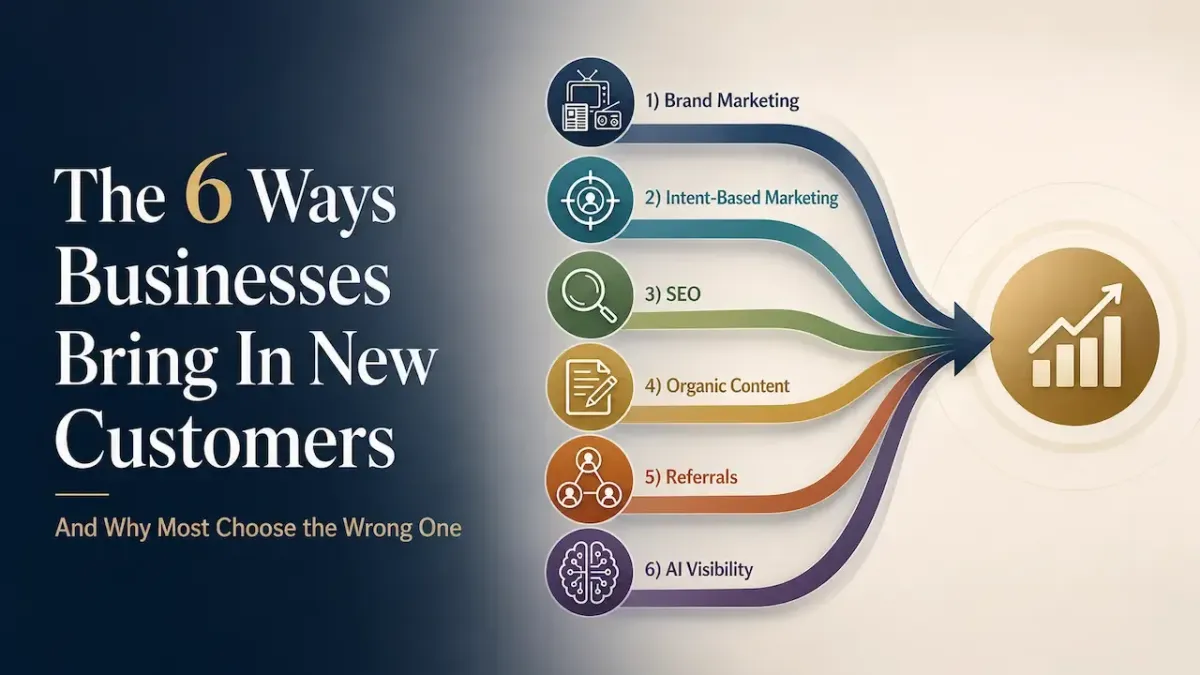
The 6 Ways Businesses Bring in New Customers
This article breaks down the six main ways businesses bring in new customers: brand marketing, intent-based marketing, SEO, organic content, referrals, and AI Visibility. It explains what each channel does best, where each one falls short, and why choosing the wrong marketing channel can waste time, money, and momentum.
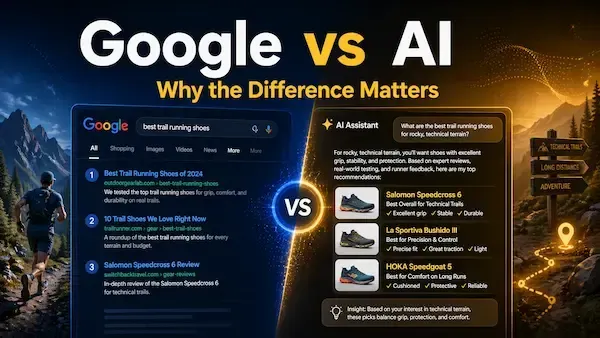
What Happens When You Compare Google vs AI
This article shows why ranking in Google and being recommended by AI are not the same thing. Using The Mad Trapper as a real-world example, it compares traditional Google search, Google AI Overview, and ChatGPT results to show how a small business can be overlooked in search, yet still become a trusted AI recommendation when its message, structure, and proof signals are clear.
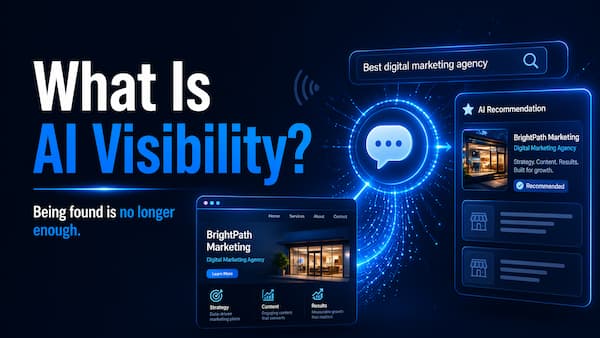
What Is AI Visibility? Being found is no longer enough.
This article explains what AI visibility means for businesses and why being found online is no longer enough. It shows how AI tools like ChatGPT and Google AI Overview are changing discovery by recommending businesses they can clearly understand, trust, and explain.

The 4-Pillar AI Visibility Stack
This article explains the framework I use to help businesses become easier for AI systems to understand, trust, and recommend. It breaks AI Visibility into four practical pillars — Message, Mechanics, Mentions, and Match — so you can see why strong businesses still get overlooked, and what it takes to build a clearer, more credible signal profile online.
Empathic Marketing: What is Means in the Ai Era
This article explains what I actually mean by Empathic Marketing — not a claim that I invented empathy, but a practical framework for applying timeless direct response principles in today’s online and AI-driven world. It breaks down why most businesses still market from their own point of view, and how a more buyer-centered approach can lead to stronger messaging, better offers, and more effective delivery.
Websites Are Becoming More Invisible — And More Important Than Ever
This article explains why websites are becoming more invisible to human readers, yet more important than ever in the age of AI. It shows how clarity, specificity, mobile usability, page structure, and real differentiation help both people and AI better understand, trust, and recommend a business.
Capture the Heart - Convince the Mind
This article shares a simple marketing lesson I saw firsthand at a networking meeting in Ottawa. It explains why the strongest marketing must do two things together: capture the heart with emotion and desire, then convince the mind with proof, process, and credibility.